
The first time I heard the word contingent, it was in a sentence that sounded serious and confusing. Someone said, “the plan is contingent on approval,” and I remember thinking, so… is it happening or not? 🤔
Later, I saw the same word in school books, news articles, contracts, and even office emails. Each time, it felt important, but the meaning wasn’t always clear.
If you’ve come across this word and felt unsure, don’t worry. This article explains what does contingent mean in very simple, everyday language.
Quick Answer:
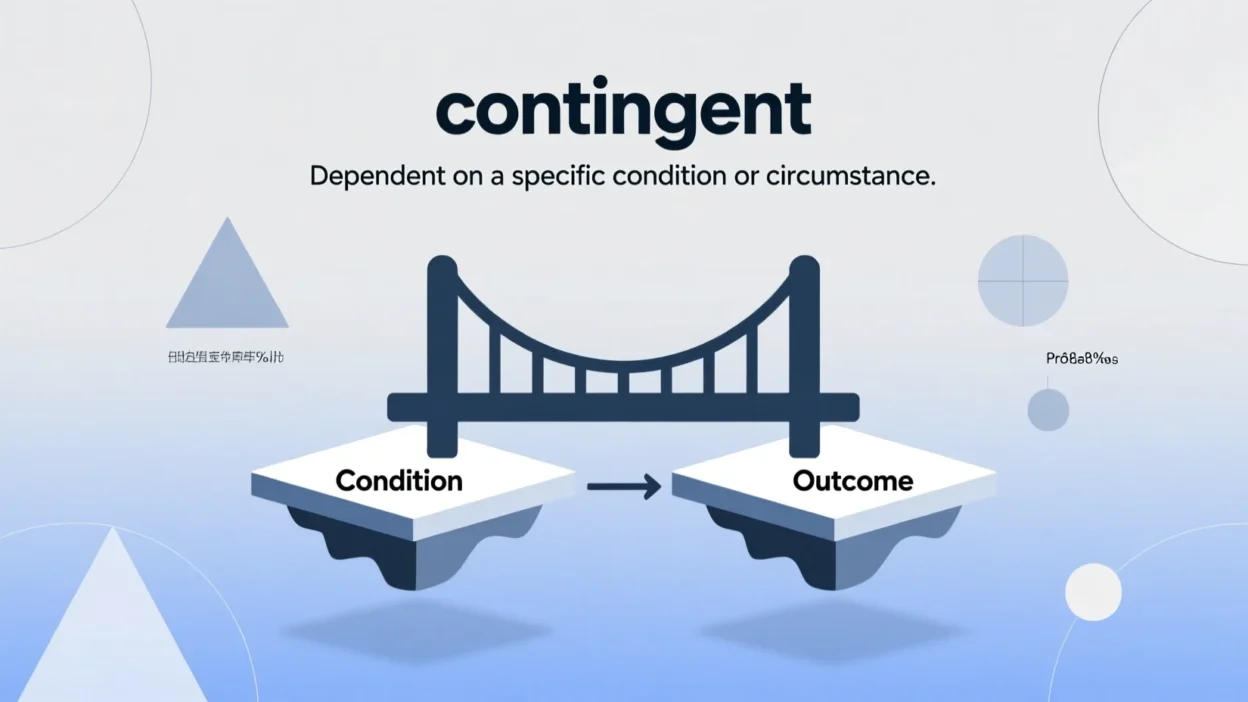
Contingent means something that depends on another thing happening first.
What Does Contingent Mean?
In simple words, contingent describes a situation that is not fixed or guaranteed.
Full Meaning (Plain English)
- Contingent = dependent on conditions
- It means “only if something else happens”
Why People Use This Word
People use contingent when they want to explain:
- a condition
- a requirement
- a possible outcome
- an uncertain plan
It helps make things clear in formal and semi-formal language.
Example Sentence
“The trip is contingent on good weather.”
In short:
Contingent = dependent on a condition or requirement.
Where Is Contingent Commonly Used?
Unlike slang, contingent is a standard English word used in many places.
Common Situations
- 📄 Contracts and agreements
- 🏫 School and academic writing
- 📰 News articles
- 🏢 Workplace emails
- 📊 Business and finance
Tone and Style
- neutral
- formal
- professional
- clear and conditional
Examples of Contingent in Conversation
Here are simple, realistic examples you might hear or read:
- “our meeting is contingent on his arrival”
- “payment is contingent upon approval”
- “the offer is contingent on background checks”
- “success is contingent on teamwork”
- “the project is contingent on funding”
- “attendance is contingent on registration”
- “results are contingent on effort”
When to Use and When Not to Use Contingent
✅ When to Use Contingent
- explaining conditions
- formal conversations
- professional writing
- contracts or rules
- clear decision-making
❌ When Not to Use Contingent
- casual texting
- informal chats with friends
- slang-based conversations
- jokes or memes
Context Comparison Table
| Context | Example Phrase | Why It Works / Doesn’t Work |
|---|---|---|
| work email | “approval is contingent on review” | professional |
| school essay | “results are contingent on data” | clear |
| friend chat | “hangout contingent lol” | sounds awkward |
| meme comment | “this is contingent” | too formal |
Similar Words or Alternatives
| Word | Meaning | When to Use |
|---|---|---|
| dependent | relies on something | general |
| conditional | based on conditions | formal |
| subject to | may change | contracts |
| based on | relies on | neutral |
| linked to | connected | informal |
| if | condition word | simple speech |
FAQs About What Does Contingent Mean
What does contingent mean in simple terms?
It means something depends on another thing.
Is contingent a formal word?
Yes, it’s mostly used in formal or professional settings.
Can contingent be used in daily conversation?
Yes, but it sounds formal.
Is contingent negative?
No, it’s neutral.
What is a contingent plan?
A plan that depends on conditions.
Is contingent the same as guaranteed?
No, it’s the opposite.
Why Contingent Is Important to Understand
Understanding contingent helps you read contracts, emails, and instructions correctly. It prevents confusion and helps you know when something is certain or uncertain.
Final Thought
Now you clearly know what contingent means. It’s a useful word that explains conditions and dependencies. While it’s not slang, it’s very important in professional and academic communication.

Aly John is an author at NumberTemple.com, writing about biblical themes, spiritual insights, and scriptural understanding, helping readers explore faith, symbolism, and deeper meanings in the Bible.