The first time I saw the word gooning, it was in a random online comment. People were using it casually, like everyone already knew what it meant.
I didn’t. At first, it sounded funny or harmless, but after seeing it pop up again on social media and forums, I realized it had a very specific meaning.
If you’ve come across this term in texts, memes, or online chats and felt confused, you’re not alone. Let’s break it down clearly and simply so you understand what people actually mean when they use this word.
Quick Answer:
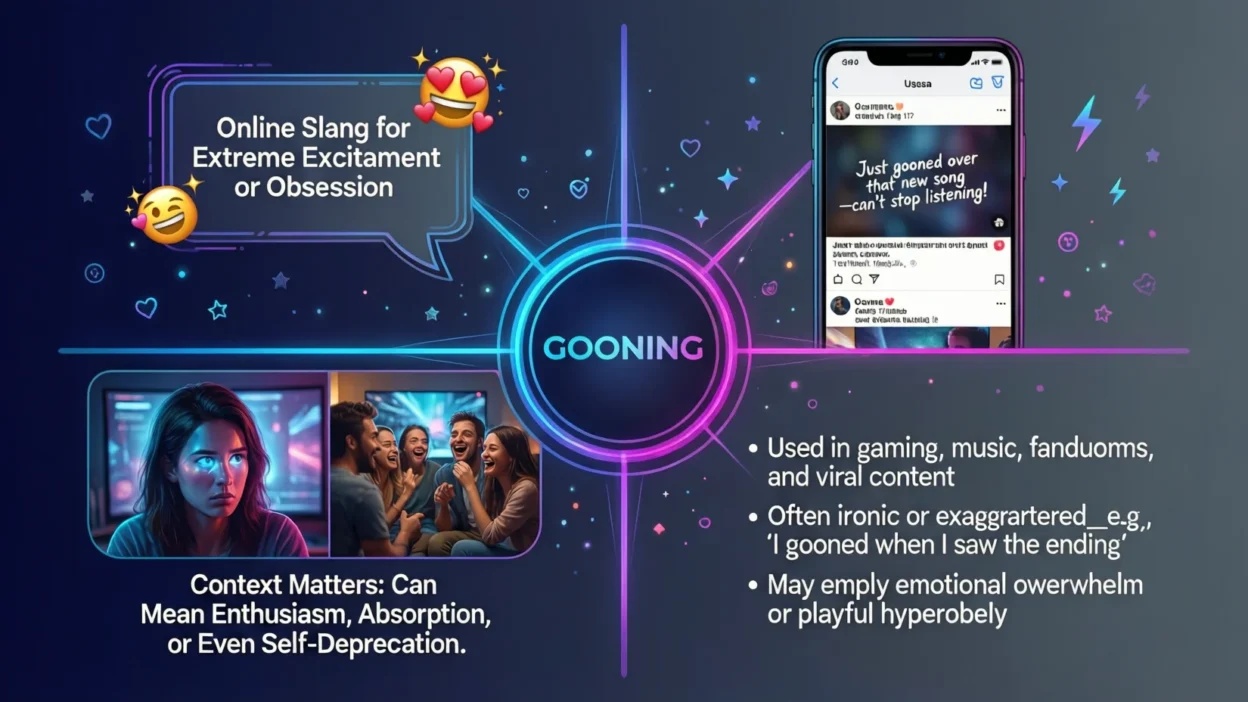
Gooning means becoming extremely absorbed or fixated on something, often used online to describe intense focus, usually in an adult or internet-slang context.
What Does Gooning Mean in Text?
In text and online slang, gooning has a very specific meaning that depends on context.
Plain-English Meaning
Most commonly, gooning is internet slang for being deeply absorbed, zoned out, or mentally fixated, often for a long time. In many online spaces, it’s linked to adult or NSFW discussions, but the core idea is extreme focus or obsession.
Why People Use It
People use gooning because:
- it’s edgy internet slang
- it describes losing track of time
- it’s common in meme culture
- it signals being “locked in” mentally
Short Example Sentence
“he’s been gooning online all night.”
In short:
Gooning = being extremely absorbed or fixated, usually used as internet slang.
Where Is Gooning Commonly Used?
You won’t hear gooning in normal daily conversation.
Common Places
- 💬 online forums
- 🧵 reddit threads
- 🐦 twitter / x
- 🎮 gaming or meme chats
- 🔞 adult or edgy internet spaces
Tone and Style
- very informal
- internet-only slang
- sometimes explicit depending on context
- not suitable for professional use
This word is not safe for all audiences, so context matters a lot.
Examples of Gooning in Conversation
Here are realistic, lowercase examples you might see online:
- “bro has been gooning for hours”
- “that stream had people gooning fr”
- “i’m not gooning, just focused”
- “internet ruined this word”
- “he said he stopped gooning”
- “gooning culture is wild”
- “that’s peak gooning behavior”
When to Use and When Not to Use Gooning
✅ When to Use
- casual online chats
- meme discussions
- slang-heavy forums
- joking with friends who understand it
❌ When Not to Use
- work or school
- public posts with mixed audiences
- professional conversations
- formal writing
Context Comparison Table
| Context | Example Phrase | Why It Works / Doesn’t |
|---|---|---|
| meme chat | “that’s pure gooning” | slang fits |
| private dm | “you were gooning last night” | casual |
| office email | “he was gooning at work” | inappropriate |
| school essay | “gooning explains focus” | unprofessional |
Similar Slang Words or Alternatives
| Slang | Meaning | When to Use |
|---|---|---|
| locked in | very focused | casual chats |
| obsessed | overly interested | neutral |
| zoned out | mentally distant | everyday talk |
| fixated | focused too much | neutral |
| grinding | working nonstop | gaming/work slang |
FAQs About What Does Gooning Mean
What does gooning mean in slang?
It means being deeply absorbed or fixated, often used in internet culture.
Is gooning a bad word?
It can be inappropriate depending on context and audience.
Is gooning safe to say publicly?
Not always. It’s best kept to informal online spaces.
Does gooning always have an adult meaning?
No, but many online uses do imply adult contexts.
Is gooning used on social media?
Yes, mostly on meme pages, forums, and slang-heavy platforms.
Can gooning just mean focusing?
In some cases, yes, but context matters a lot.
Final Thought
Now you know what gooning means and why it shows up online so often. It’s a modern internet slang term that describes extreme mental absorption, but it’s not suitable for every situation. Understanding the context helps you avoid confusion or embarrassment when you see it used.

Rohan Ahmad was an author who wrote about biblical topics, spiritual interpretations, and scriptural insights, helping readers gain a deeper understanding of faith, symbolism, and meaningful biblical teachings.