In today’s digital age, GPS has become an essential part of everyday life. Whether you are using Google Maps, tracking a delivery, sharing your live location, or navigating while driving, GPS makes it all possible. Despite using it daily, many people still wonder what GPS actually stands for and how it works.
Short Answer:
GPS stands for Global Positioning System.
What Does GPS Mean?
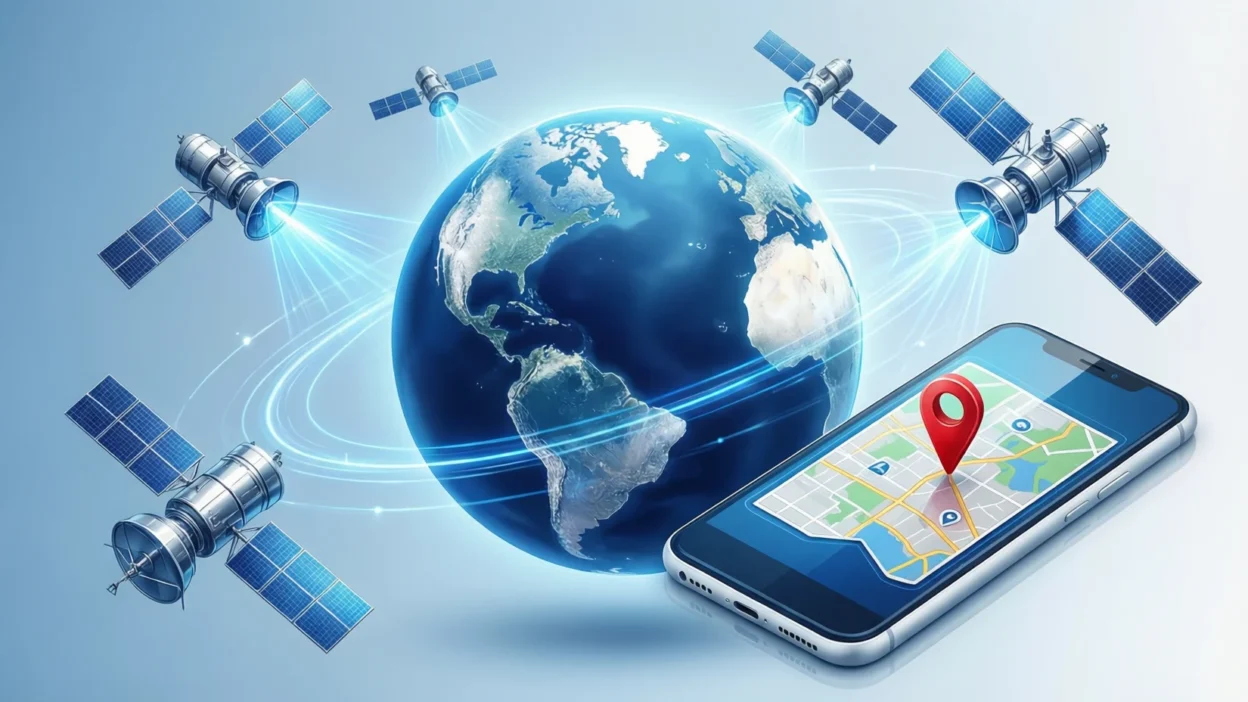
GPS (Global Positioning System) is a satellite-based navigation system that helps determine the exact location of a person, vehicle, or object anywhere on Earth. It provides precise data such as latitude, longitude, altitude, speed, and time.
GPS works globally and does not require internet access, making it reliable even in remote areas.
How Does GPS Work?
GPS works through a network of satellites orbiting the Earth.
Step-by-Step Explanation:
- GPS satellites continuously send signals toward Earth
- Your device (phone, car system, tracker) receives signals from multiple satellites
- The device calculates the distance from each satellite
- Using these distances, it pinpoints your exact location
This process is called trilateration.
What Is GPS Used For?
GPS has many practical applications across different industries:
📍 Everyday Uses
- Navigation and maps
- Location sharing
- Ride-hailing apps (Uber, Careem)
- Finding lost phones
🚗 Transportation
- Car navigation systems
- Fleet tracking
- Traffic monitoring
🚑 Emergency Services
- Locating emergency callers
- Disaster response and rescue operations
🏃 Fitness & Sports
- Tracking distance and speed
- Route mapping for running and cycling
✈️ Aviation & Shipping
- Aircraft navigation
- Marine route planning
Does GPS Need Internet?
❌ No, GPS does not need internet to determine your location.
However, apps like Google Maps use the internet to:
- Load maps
- Show traffic conditions
- Provide route updates
Advantages of GPS
- Works worldwide
- High accuracy
- Available 24/7
- Free to use
- Supports many devices
Limitations of GPS
- Reduced accuracy indoors
- Signals can be blocked by tall buildings or tunnels
- Battery usage on mobile devices
Who Controls GPS?
GPS is owned and maintained by the United States government, but it is free for public use worldwide.
Frequently Asked Questions (FAQs)
#### What does GPS stand for in mobile phones?
GPS stands for Global Positioning System, used to locate your phone’s position.
#### Is GPS accurate?
Yes, modern GPS devices can be accurate within a few meters.
#### Can GPS work without SIM?
Yes, GPS works without a SIM card or mobile data.
#### Is GPS safe?
Yes, GPS only receives signals; it does not transmit personal data.
Final Thoughts
GPS (Global Positioning System) is a powerful technology that helps people navigate the world safely and efficiently. From daily commuting to emergency response, GPS has become a vital part of modern life.

Rohan Ahmad was an author who wrote about biblical topics, spiritual interpretations, and scriptural insights, helping readers gain a deeper understanding of faith, symbolism, and meaningful biblical teachings.