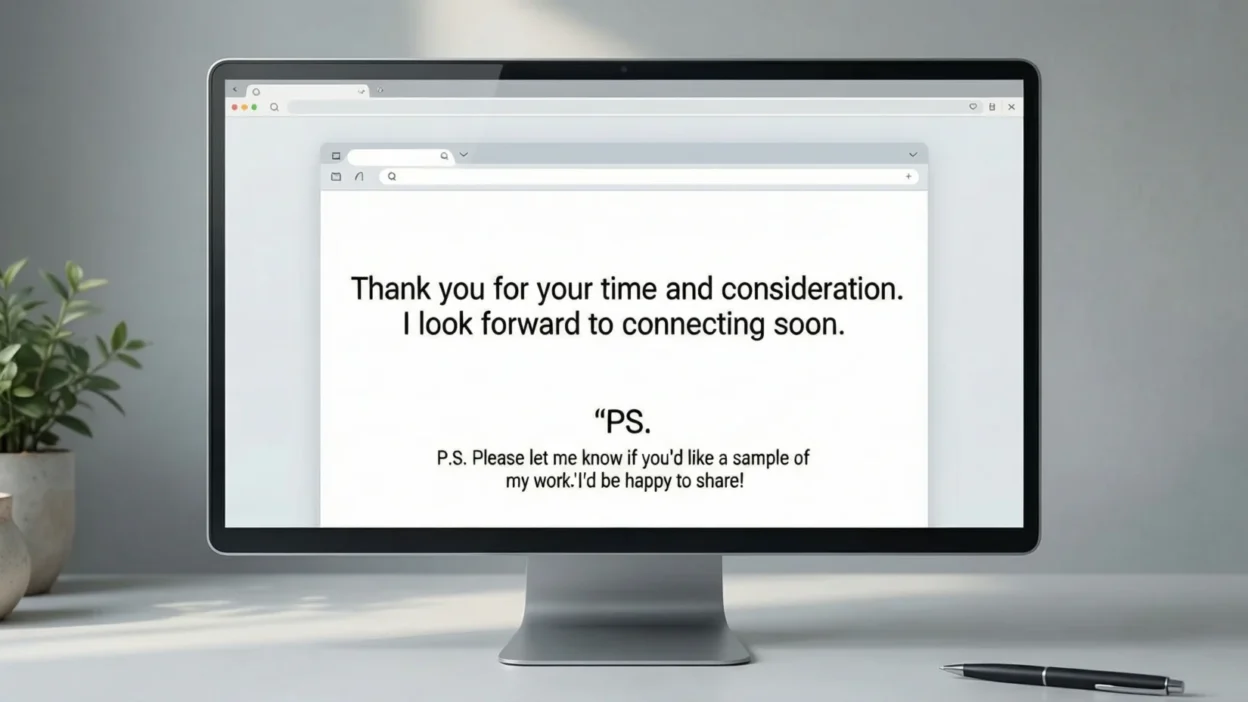
The first time I noticed PS was at the end of an email. Someone had already said goodbye, signed their name, and then added a short line starting with “PS.” I remember thinking, why add something after the message is already finished? 🤔
Later, I started seeing PS not only in emails, but also in texts, captions, and online posts. That’s when I realized PS is a small word with a very specific purpose.
In this article, I’ll explain what PS means, how it’s used, where you’ll see it, and give easy examples so it feels crystal clear.
Quick Answer:
PS means “Postscript.” It’s a neutral and useful way to add extra information after the main message is finished.
What Does PS Mean?
PS comes from the Latin word postscriptum, which means “written after.”
Plain-English Meaning
When someone uses PS, they are adding:
- an extra thought
- a reminder
- something important they forgot to say earlier
It comes after the main message, not in the middle.
Why People Use PS
People use PS to:
- highlight something important
- add a quick note
- keep the main message clean
Short Example Sentence
“thanks for your help. ps, don’t forget the meeting tomorrow.”
In short:
PS = Postscript = extra message added at the end.
Where Is PS Commonly Used?
PS is not slang. It’s a standard writing term used in many places.
Common Platforms
- 📧 emails
- 📝 letters
- 💬 text messages
- 📱 social media captions
- 🧑💻 online posts and blogs
Tone and Style
- neutral
- informal to semi-formal
- friendly
- acceptable in casual and professional writing
Examples of PS in Conversation
Here are realistic, simple examples written in lowercase:
- “see you tomorrow. ps, bring snacks”
- “i sent the file. ps, check page 3”
- “happy birthday! ps, i got you a gift 🎁”
- “thanks for helping me. ps, you’re awesome”
- “good luck today. ps, you’ve got this”
- “email sent. ps, let me know if you have questions”
- “done with the task. ps, deadline moved”
- “talk later. ps, call me when free”
When to Use and When Not to Use PS
✅ When to Use PS
- adding a forgotten detail
- highlighting an extra point
- friendly emails or messages
- casual or semi-formal writing
❌ When Not to Use PS
- very formal legal documents
- academic essays
- official reports
- when the message should stay strict
Context Comparison Table
| Context | Example Phrase | Why It Works / Doesn’t Work |
|---|---|---|
| “ps, attached the file” | clear & helpful | |
| texting | “ps don’t be late” | natural |
| legal doc | “ps the contract changed” | not appropriate |
| essay | “ps this is important” | informal |
Different Meanings of PS (Context Matters)
While PS usually means Postscript, it can have other meanings depending on context.
Common Alternative Meanings
| PS Meaning | Used In |
|---|---|
| postscript | emails, letters |
| playstation | gaming |
| photoshop | design & editing |
| pounds per second | technical fields |
| problem solving | education |
👉 In everyday chat and writing, Postscript is the most common meaning.
Similar Words or Alternatives
| Word | Meaning | When to Use |
|---|---|---|
| note | extra info | messages |
| by the way | side thought | casual chat |
| also | addition | general writing |
| one more thing | extra point | informal |
| additionally | extra detail | formal writing |
FAQs About What Does PS Mean
What does PS stand for?
PS stands for Postscript.
Is PS formal or informal?
It’s neutral, but more common in casual or semi-formal writing.
Can I use PS in emails?
Yes, it’s very common in emails.
Is PS still used today?
Yes, especially in digital messages and emails.
Can PS be used more than once?
Yes, people sometimes use PPS for another extra note.
Does PS mean something in texting?
Yes, it usually means an extra message at the end.
Why Understanding PS Is Helpful
Knowing what PS means helps you understand emails and messages better. It also helps you communicate more clearly by adding extra details without confusing the main message.
Final Thought
Now you clearly understand what PS means. It’s a simple but powerful way to add one last thought after your message is done. Whether in emails, texts, or posts, PS helps highlight what matters most.

Abdul Hadi is an author who wrote about biblical themes, spiritual reflections, and scriptural insights, helping readers understand faith, symbolism, and deeper meanings through thoughtful and engaging content.